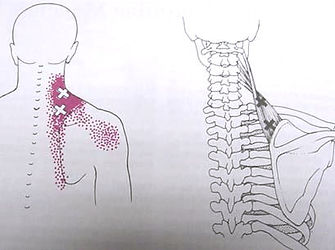
Winged Scap/Anterior Tilt
Winged scapula is generally recognised as the medial boarder of the scapula no longer remaining flush on the rib cage, in motion or when static. Anterior tilt of the scapula is further typified by the more prevalent protuberance of the inferior angle of the scapula and depression of the coracoid process of the scapula.
Common causes are:
• Lifestyle – seated frontal occupation, less active leisure preferences (also frontal activities – gaming, on computer)
• Injury – injury to the acromio-clavicular joint (AC joint)
• Unbalanced strengthening programs – preference of chest exercises over upper back exercises
• General muscular imbalances – lack of muscle tone in relevant muscles, or hypertonia in relevant muscles
Issues due to long term dysfunction:
• Neck and shoulder tightness – head aches
• Reduced shoulder range of movement –reaching above the head (shoulder flexion), reaching to the side (shoulder abduction), throwing/bowling (internal and external rotation)
• Regular pain within shoulder joint (sub acromial space) – bursitis, adhesive capsulitis, supraspinatus tendonopathy
• Regular anterior shoulder pain – bicep tendonopathy


Serratus push ups
Focus – Serratus Anterior
Description – Depending on your current abilities, select a suitable push up position. The idea is to have as much control over the movement as possible, so regression is advised. Once set in the push up position, keep arms straight and allow the body to sink forward between the shoulders. From this sunken position, press the shoulders forward until in line with the rib cage again.
Sets/reps – 2-3 sets of 8-10 reps
Load – Regressed push up – wall, smith machine, bench/chair, knees
Activation Program
Shoulder Extensions
Focus – Lower Trapezius
Description – Lay prone (on stomach) on bench/plinth or be set in a single arm row position with a light dumbbell. Slightly work to retract the scapula til some tension is felt between the shoulder blades. Keeping the working arm straight, begin to bring the dumbbell towards the hip until the arm is parallel with the torso. Have a brief pause at the height of the contraction, and then begin to lower the dumbbell, in a controlled manor, to the starting position.
Sets/Reps – 2-3sets of 8-10 reps
Load – 1-4kg dumbbell
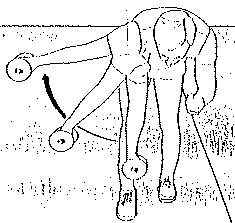
Rear Flys
Focus – Middle Trapezius and Rhomboids
Description - Lay prone (on stomach) on bench/plinth or be set in a single arm row position with a light dumbbell. Slightly work to retract the scapula til some tension is felt between the shoulder blades. Keeping the working arm straight, begin to fly the arm out to the side of the body till hand is in line with the shoulder. Have a brief pause at the height of the contraction, and then begin to lower the dumbbell, in a controlled manor, to the starting position.
Sets/Reps – 2-3sets of 8-10 reps
Load – 1-4kg dumbbell
Progression: Once control of the movement is satisfactory, begin coupling these exercises with their compound movement counterpart, e.g. rear flys and shoulder extensions can be superseded with seated row or lat pull downs; and serratus push ups can be used in conjunction with push ups. Once consistent functional strength and power return, these isolation exercises should no longer be necessary but can be good warm up exercises.
Mobility Program
Upper Trapezius – Trigger point therapy
Rhomboids – Trigger point therapy
Levator Scapulae – Trigger point therapy
*Due to the protracted and elevated position of the scapula in the case of Anterior tilt of the scapula, the upper traps work over time to support the positioning of the shoulder griddle leading to tightness and discomfort around the shoulder up to the neck. In respect to the Rhomboids and Levator Scapulae, the action of retraction becomes more an action of downward rotation due to the deviation of the axis of rotation of the scapula. This increases the workload upon these muscles, leading to tightness and discomfort of the neck and upper back. Trigger point therapy will help restore these muscles back to an efficient functioning state.


Pectoralis Major – Trigger point therapy and stretches
Pectoralis Minor – Trigger point therapy and stretches